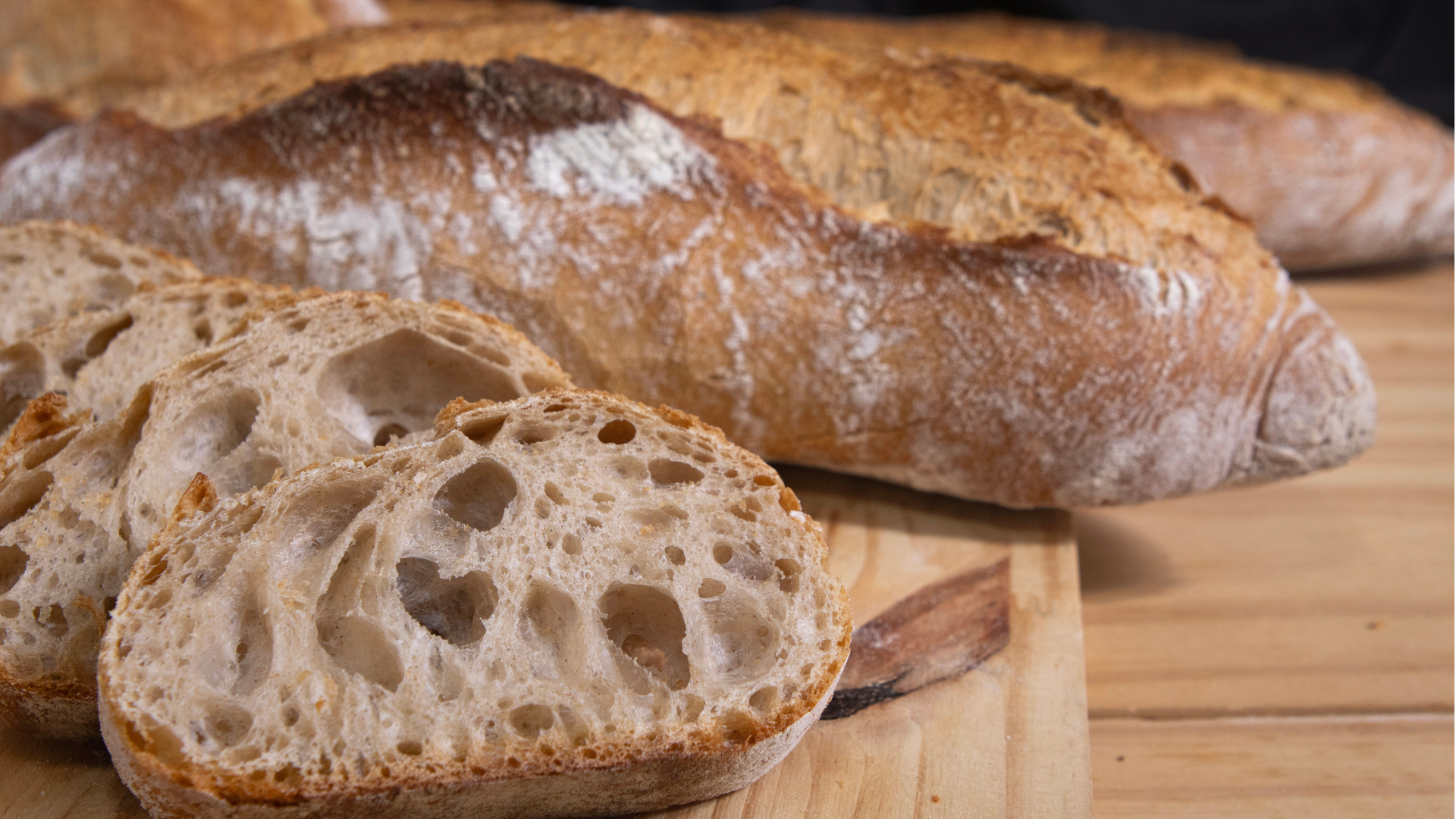
When we talk about bakery trends, few topics have gained as much strength in recent years as natural fermentation. Besides being a production technique, it has come to occupy space in display cases, menus and bakery communications as a differentiator associated with flavor, quality, tradition and authenticity.
Consumers are increasingly interested not only in the product that reaches the table, but also in the story behind it. Terms such as “sourdough starter”, “natural fermentation” and “artisan recipe” catch attention and help build a perception of higher value.
For the bakery, this represents an opportunity: to offer differentiated products, expand the mix and work with items of higher perceived value.
But there is an important challenge in this equation: how to bring the characteristics of natural fermentation into production without making the process excessively complex?
This is where premixes can make the difference!
Natural fermentation: much more than a trend
Before thinking about commercial application, it is important to understand what is behind the concept of natural fermentation.
One of the main elements of this process is the sourdough starter (massa madre), a culture obtained from combining flour and water, subjected to suitable conditions so that natural fermentation occurs. During this process, yeasts and bacteria develop that contribute to the product's characteristics.
When incorporated into a formulation, sourdough takes part in building the sensory profile, contributing to more complex flavors, distinctive aromas and a differentiated consumption experience.
That is why natural fermentation is so closely tied to the perception of craftsmanship. It is not just a step in the production process: it also helps tell a story about the product.
For consumers, a bread or panettone associated with natural fermentation can represent tradition, care and quality. For the bakery, it can mean an opportunity for differentiation in an increasingly competitive market.
What does natural fermentation add to the product?
The use of sourdough starter can contribute to different sensory attributes and to the consumer's perception of the product.
Among them are:
- More complex and balanced flavors, which can provide a differentiated gastronomic experience;
- More distinctive aromas, associated with the characteristics of fermentation;
- Artisanal profile, reinforcing the perception of care and tradition;
- Higher perceived value, allowing the product to stand out within the bakery's mix.
In practice, this means that natural fermentation can go from being merely a technical characteristic to becoming a positioning tool.
The question is: how to turn this differentiator into production that is consistent every day?
The challenge of reproducing natural fermentation in the bakery routine
Working with natural fermentation in the traditional way requires technical knowledge and monitoring of the different variables involved in the process.
Fermentation time and temperature, environmental conditions, feeding and the behavior of the sourdough starter are some of the factors that can influence the final result.
Besides operational complexity, there is another challenge very present in the market: the need for skilled labor.
When knowledge about a given process is concentrated in a few professionals, production can become dependent on those people. A change in the team or the absence of an employee can impact standardization and production continuity.
It is also necessary to consider that traditional processes can involve:
- longer fermentation periods;
- constant monitoring;
- greater operational complexity;
- need for specialized training;
- possibility of variation between batches;
- greater difficulty scaling production while maintaining the same standard.
This does not mean that natural fermentation is not suitable for a bakery. Quite the opposite. It means that, to turn this concept into a business opportunity, it is necessary to find a balance between tradition, quality, productivity and standardization.
Premix: bringing tradition and convenience together
It is precisely in this scenario that premixes gain ground.
By bringing together specific ingredients and characteristics in a solution developed to ease the production process, the premix can help reduce operational complexity and make the production of differentiated items more accessible.
The idea is not to replace technical knowledge or distort the artisanal product. It is to offer an alternative so that the bakery can incorporate characteristics valued by consumers into its production in a more practical and consistent way.
In practice, this can mean fewer steps, easier execution and greater confidence in reproducing the result.
In other words: the bakery can explore the value of natural fermentation without necessarily taking on all the complexity of a traditional process.
Rustique Line: artisanal characteristics with more practicality
With this opportunity in mind, Emulzint developed the Rustique Line, a line of premixes with inactive sourdough.
The proposal is to help the bakery offer products with characteristics associated with natural fermentation, while maintaining practicality, standardization and production efficiency.
With solutions such as Rustique Madre e Rustique Crispy Onion, it is possible to explore different product possibilities and expand the bakery's mix with artisanal-style recipes.
This makes it possible to work with natural fermentation as more than a trend, as part of a differentiation strategy. After all, when a product stands out for its flavor, aroma and concept, it also gains a story to be told at the point of sale.
Panetone Madre: Italian tradition with production practicality
The same logic can be applied to panettone production.
Traditionally associated with longer and more complex processes, panettone is a product in which texture, aroma and flavor play a fundamental role in the perception of quality.
O Panetone Madre was developed precisely to bring the tradition of natural fermentation closer to the needs of modern production.
Its formulation also includes inactive sourdough, contributing to a balanced, buttery flavor profile with a characteristic slight acidity.
The result is an extremely soft and light panettone, with moist crumb, easy shredding and high fibrousness — characteristics associated with long-fermentation panettones.
And here is one of the main differentiators: convenience.
More convenience without giving up versatility
In the process, simply add water, flour, baker's yeast and the ingredients chosen to customize the recipe.
Candied fruits, raisins and chocolate chips are some of the possibilities for creating different versions. In addition, it is not necessary to add eggs or yolks, simplifying the formulation even further.
Versatility also allows exploring applications beyond the traditional sweet panettone. The product can be used in recipes with chocolate, fruits, nuts, seeds, cheeses, cocoa, among others.
This flexibility expands creative possibilities and allows the bakery to develop different products according to its audience, its commercial proposal and consumption occasions.
Another point is the possibility of working either through the straight dough method as well as the sponge method, allowing the process to be adapted to the reality of each production.
Thus, Panetone Madre combines attributes that help build value for the consumer — such as flavor, aroma, softness and artisanal perception — with characteristics that matter to the business, such as convenience, flexibility and standardization.
Natural fermentation can also be a business strategy
When we talk about naturally fermented products, it is common to think first about the production process. But there is a second question the bakery needs to ask:
How to turn this differentiated product into business results?
The answer involves understanding the value perceived by the consumer and working on this differentiator strategically.
A naturally fermented product can hold a different position within the mix. It can be presented as a premium option, gain prominence in the display case, take part in tasting activities or be used as a base for new combinations and recipes.
The goal is not simply to produce one more item, but to create an offering that has story, differentiation and perceived value.
Tradition that fits into the bakery's routine
Natural fermentation has won space because it delivers something beyond technique: it adds flavor, aroma, story and perception of quality to products.
At the same time, the reality of bakeries demands productivity, standardization and processes that can be reproduced daily.
It is precisely in this meeting of tradition and efficiency that premixes can become great allies.
With solutions such as the Rustique Line and Panetone Madre, Emulzint seeks to bring the valued characteristics of natural fermentation closer to the needs of modern production.
Because innovating in baking does not mean leaving tradition aside. It means finding new ways to bring this tradition to more products, more consumers and more business opportunities.
Read also: Single-serve portions in bakery: how to increase your bakery's profitability